
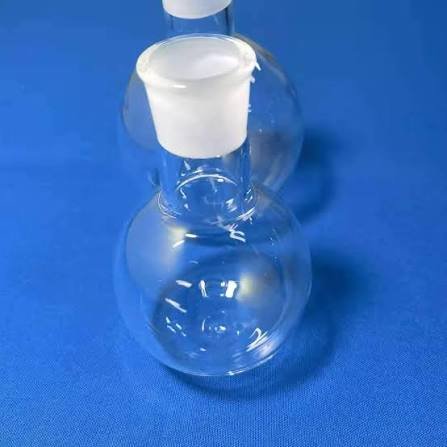
When working in demanding laboratory and industrial environments, standard glassware often falls short under extreme temperatures, aggressive chemical reagents, or rigorous thermal cycling. For applications requiring exceptional purity and thermal endurance, quartz glassware is the gold standard. Among the various pieces of laboratory equipment, Quartz Flasks stand out as essential components for heating, boiling, distillation, and high-purity synthesis. Choosing the correct flask requires a comprehensive understanding of material properties, specific operational requirements, and design variations. This guide provides a detailed roadmap to help you select the ideal quartz flasks for your precise laboratory or industrial needs.
Understanding the Unique Properties of Quartz Flasks
To appreciate why quartz is chosen over traditional borosilicate glass, it helps to examine its fundamental material characteristics. Quartz, scientifically known as silicon dioxide ($SiO_2$), possesses a unique atomic structure that grants it extraordinary thermal and chemical properties.
First, Quartz Flasks exhibit an extremely low coefficient of thermal expansion. This means they can withstand rapid, extreme temperature changes—often referred to as thermal shock—without cracking or fracturing. While standard glassware might shatter when transferred directly from a high-temperature heating mantle to a cool surface, high-purity quartz maintains its structural integrity.
Second, quartz offers remarkable chemical purity. Standard glass can leach trace elements like sodium, boron, or iron into sensitive chemical solutions, altering experimental results or contaminating high-purity industrial batches. Quartz Flasks are virtually inert to most acids, bases, and organic solvents, making them indispensable for trace metal analysis, semiconductor manufacturing, and pharmaceutical synthesis.
Third, quartz possesses excellent optical transmission properties, transmitting ultraviolet (UV) and infrared (IR) light efficiently. This makes quartz flasks ideal for photochemical reactions and specialized spectroscopic applications where light penetration is crucial.
Key Applications in Laboratory Settings
In research and analytical laboratories, Quartz Flasks are utilized across various disciplines where precision and durability are paramount.
High-temperature synthesis often requires vessels capable of enduring temperatures exceeding 1000 degrees Celsius. Standard glass softens or deforms at these levels, whereas quartz retains its mechanical strength, making it the preferred container for high-temperature reactions and pyrolytic studies.
Trace metal analysis and acid digestion procedures frequently demand ultra-clean environments. Because Quartz Flasks do not introduce background contamination, analytical chemists rely on them to digest samples in concentrated acids such as nitric, hydrochloric, or perchloric acid without compromising trace element measurements.
Acid reflux and distillation setups also benefit greatly from quartz vessels. Whether purifying volatile organic compounds or boiling aggressive mineral acids, a well-constructed quartz flask ensures safety, longevity, and purity throughout long-running reflux cycles.
Industrial Applications of Quartz Flasks
Beyond the research bench, Quartz Flasks play a critical role in large-scale industrial manufacturing, particularly where contamination control and extreme heat are daily realities.
Semiconductor manufacturing and wafer processing require ultra-pure chemicals. Silicon wafer cleaning and etching processes utilize quartz vessels to prevent any metallic or particulate contamination from degrading electronic components.
The chemical processing industry employs Quartz Flasks and custom reactors for producing high-purity specialty chemicals, electronic-grade acids, and pharmaceutical intermediates. The inert nature of quartz prevents catalytic side reactions that might be catalyzed by metallic impurities in lower-grade containers.
Additionally, the photovoltaic and solar industries utilize quartz components for high-temperature diffusion and deposition processes, where precision temperature control and purity directly impact solar cell efficiency.
Factors to Consider When Selecting Quartz Flasks
Selecting the appropriate flask involves evaluating several technical parameters to match your specific workflow.
Purity Grades: Transparent versus Opaque Quartz
Quartz glassware generally falls into two primary purity categories. Transparent quartz is made from high-purity synthetic or natural silica and is completely clear, allowing for visual monitoring of chemical reactions and maximum UV transmission. Opaque or translucent quartz, often manufactured through electrical fusion, is more cost-effective and provides higher mechanical strength and thermal insulation in high-heat industrial furnaces, though it lacks optical clarity.
Thermal Shock Resistance and Wall Thickness
Evaluate the heating profile of your application. If your process involves rapid heating and cooling cycles, choose Quartz Flasks with uniform, optimized wall thickness. Thicker walls provide mechanical robustness for industrial settings, while thinner, uniform walls allow for faster heat transfer and reduced thermal gradients during rapid laboratory heating.
Design Variations: Round Bottom, Flat Bottom, and Erlenmeyer Shapes
Quartz Flasks come in multiple configurations tailored to different mixing and heating methods. Round-bottom flasks are ideal for uniform heating with heating mantles and for rotary evaporation. Flat-bottom flasks can stand upright independently on benchtops or hot plates without requiring support rings, though they are generally less resistant to extreme thermal shock than round-bottom variants. Erlenmeyer or conical quartz flasks are excellent for titration, mixing, and culturing due to their narrow necks which minimize splashing and evaporation.
Joint Sizes and Customization
Ensure that the ground glass or quartz joints match your existing setup. Standard taper joints (such as standard ground joints designated by sizes like 24/40) ensure leak-free connections with condensers, stoppers, and thermometers. For specialized industrial or research applications, custom-fabricated quartz flasks with multiple necks, specialized side-arms, or specific volume capacities can be engineered to integrate seamlessly into complex apparatus.
Maintenance, Cleaning, and Safety Best Practices
Proper handling and maintenance significantly extend the operational lifespan of high-value Quartz Flasks.
Cleaning protocols should match the residues left by your processes. While quartz is resistant to most acids, hydrofluoric acid (HF) and hot phosphoric acid will attack and dissolve quartz over time. Avoid using HF unless specifically intended for etching, and always neutralize and rinse flasks thoroughly with deionized water after use.
Preventing mechanical damage is equally vital. Quartz is hard, but it is brittle. Avoid using metal stirring rods or scrapers that could scratch the interior surface, as microscopic scratches can act as stress concentrators, leading to premature cracking under thermal stress. Always inspect your quartz flasks under good lighting or polarized light for micro-fractures before subjecting them to high heat.
Conclusion
Choosing the right Quartz Flasks requires balancing chemical purity, thermal endurance, design geometry, and budget constraints. Whether you are conducting trace-level analytical chemistry in a university lab or managing high-purity chemical synthesis in an industrial plant, investing in premium quartz glassware guarantees safety, reliability, and precision. By carefully evaluating purity grades, wall thickness, joint configurations, and proper maintenance protocols, you can ensure your quartz flasks deliver optimal performance for years to come.