Five-Axis Clearance Without Losing Accuracy: How to Build Tall Fixtures That Stay Rigid
Five-axis machining is all about access. The whole reason you bought rotary capability was to reach more faces in fewer setups, improve surface continuity, and avoid stacking tolerances across multiple clamps. But access brings a tradeoff: to clear the tool and avoid collisions, five-axis fixtures often need to be tall. Taller risers, tombstones, or stacked plates give you swing room—yet they also increase leverage, making your setup more sensitive to tiny errors and vibration.
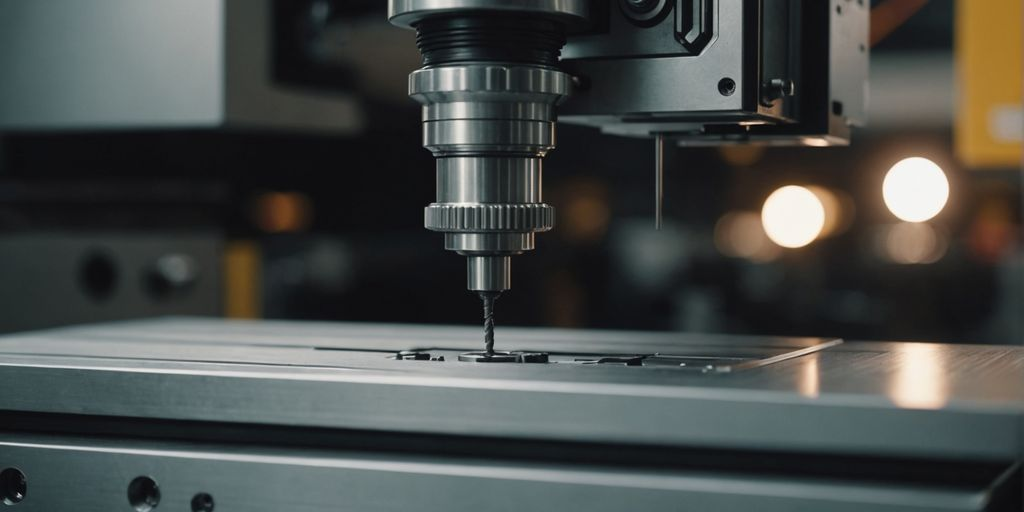
This blog is a practical guide to getting the clearance you need without sacrificing rigidity or repeatability. We’ll look at why tall fixtures amplify error, how to design around leverage, and what habits keep five-axis setups stable in real production.
Why tall fixtures magnify small mistakes
A basic physics rule explains most five-axis fixture trouble: deflection grows with length. The further your cutting zone is from the machine table, the more any micro-movement at the base becomes a visible error at the part. A 0.005 mm shift at the interface might not matter near the table, but with a 200–300 mm riser and a tilted tool, that tiny shift can turn into a measurable angular or positional deviation at the surface.
This is why five-axis users sometimes see “mysterious” errors that change with tilt angle. The machine is accurate—but the fixture is acting like a lever.
Start with the interface: make the base repeatable
Before you add height, lock down the foundation. If your machine-to-fixture interface isn’t repeatable, every millimeter of height will multiply the inconsistency. Traditional bolt-down plates can work, but they often depend on human torque feel, cleanliness, and indicating style. In high-mix five-axis work, a repeatable docking baseline is the simplest way to stop “levered error” from entering your stack-up.
Many shops standardize this layer with modular zero-point families such as 3r systems so fixtures seat into the same coordinate world every time. The practical benefit is huge: you can remove a tall fixture, inspect, and return without re-indicating—and you don’t rebuild your datum from scratch each swap.
Design tall fixtures like structural parts, not plates
Once the base is stable, treat the fixture body like a structural beam. The common mistake is stacking flat plates or using thin risers because they’re easy to machine. But thin stacks behave like springs. Your design goal is high stiffness per unit height.
A few reliable rules:
- Use box sections or ribbed walls, not flat slabs. Closed shapes resist bending and torsion far better.
- Keep walls thick where loads travel. Material near the neutral axis contributes little stiffness—put mass where it fights bending.
- Reduce cantilevering. If the part overhangs off one side, you’re creating a diving board. Center mass over support.
- Shorten load paths. Cutting forces should flow straight into the base, not through skinny bridges.
- Make symmetry your friend. Symmetric shapes don’t “settle” differently when the table rotates.
If you’re unsure, do a simple reality check: clamp the fixture on the table, place a dial indicator at the cut zone, and push by hand in the cutting direction. If you can see measurable deflection, the tool will see more under real load.
Clearance planning beats last-minute risers
Five-axis collision problems often get “fixed” by adding height late in the process. But late risers frequently cause new accuracy issues. A better workflow is to plan clearance early:
- Simulate tool reach and rotary travel in CAM before finalizing the fixture height.
- Choose the minimum height that clears the worst-case tilt and tool length.
- Reserve a safety margin (typically 10–15 mm) for chip buildup or unexpected geometry.
Every extra millimeter you add beyond real need is leverage you’ll have to buy back with stiffness.
Don’t let clamping reintroduce instability
Even with a stiff tall fixture, the final accuracy still depends on how the part is clamped. Uneven clamping forces can tilt a part microscopically; at height, that tilt becomes a bigger positional error across the toolpath. Balanced clamping is especially important for tall five-axis setups because gravity vectors change as the table rotates.
Self-centering clamping helps reduce bias because jaws move symmetrically and pull the part to a predictable midline. In many general five-axis setups, a compact symmetric module like CNC Self Centering Vise is used to keep seating repeatable without manual nudging, which lowers the chance of “part settling” after rotations.
Maintenance habits that matter more in tall setups
Height increases sensitivity, so tiny cleanliness or torque issues matter more than usual. A short discipline routine protects repeatability:
- Blow off and wipe locating faces every swap. A single chip under a locator can create angular error at height.
- Torque in a consistent pattern. Random torque order introduces micro-tilt in stacks.
- Re-inspect joints weekly. Tall fixtures have more joints; joints loosen.
- Avoid stacking oily debris between plates. It prevents full contact and acts like a slippery shim.
Tall five-axis fixtures aren’t fragile, but they are honest: they reveal every small sloppiness you could get away with near the table.
Closing thought
Five-axis fixturing is a clearance game and a stiffness game at the same time. The trick is not to avoid height—it’s to control what height does to your error stack. Build a repeatable base interface, design the fixture body like a structure, minimize unnecessary elevation, and clamp parts with balanced forces. Do those things, and tall five-axis setups stop being risky. They become a confident, repeatable production tool.